What Is A General Contractor? Complete Guide For April 2026
Learn what general contractors do, salary ranges, licensing requirements, and how to hire one. Complete guide with FAQ updated for April 2026.
The best general contractors keep everything running smoothly once the project gets moving. You're not fielding calls from confused subcontractors or wondering why the plumber can't start because the permit didn't clear. Everything just happens in the right order, and you only hear about problems after they've already been solved. That kind of calm doesn't happen by accident.
TLDR:
- General contractors coordinate every phase of a build: hiring subs, pulling permits, managing budgets, and keeping projects on schedule
- Average salary is $63,175 annually, ranging from $45,000 entry-level to $90,000+ for experienced commercial contractors
- Most states require 3-5 years of field experience plus passing a licensing exam covering codes and business law
- The construction industry needs 499,000 new workers in 2026, making labor shortages the biggest challenge for GCs
- Constructable unifies drawings, RFIs, submittals, daily logs, and change orders in one system with AI-powered search
What Is A General Contractor
A general contractor runs a construction project from start to finish. They hire and manage subcontractors, order materials, pull permits, schedule work, and keep everything on budget and in compliance with code.
When you need to build or renovate, the general contractor is your single point of contact. Subcontractors handle specialized work, such as electrical or plumbing, while the general contractor coordinates everyone, keeps the schedule on track, and handles problems as they arise.
They own the outcome of your project.
Core Responsibilities Of A General Contractor
The job covers every phase of a build. Here's what general contractors handle day to day:
Project planning starts with translating drawings into a workable schedule. You're sequencing trades, ordering materials early, and figuring out what has to happen before the next crew shows up.
Budget management is constant. Reviewing invoices, tracking costs against the estimate, processing change orders, and catching overruns before they spiral out of control.
Hiring and managing subcontractors takes up more time than most people think. You're vetting electricians, negotiating rates, coordinating schedules across multiple trades, and making sure their work holds up.
Permits and inspections keep the project legal. That means pulling building permits, scheduling inspections with the city, and staying on top of code requirements that vary by location.
Quality control is done in the field itself. Walking the job, reviewing completed work, catching problems while they're still fixable, and holding trades to the standards spelled out in the contract.
Schedule oversight means adjusting when things go sideways. Weather delays, late material deliveries, or scope changes all push dates around. Keeping everyone updated when timelines shift prevents bigger headaches later.
Safety compliance isn't optional. Running toolbox talks, enforcing PPE rules, and making sure everyone leaves the site without an injury.
Communication ties it all together. Updating owners, answering architect questions, coordinating with inspectors, and managing expectations when the original plan needs to change.
General Contractor Salary And Earnings
Pay varies widely based on location, project type, and experience.
The average general contractor earns $63,175 a year as of February 2026. Entry-level roles start closer to $45,000, while experienced contractors running larger commercial projects can clear $90,000 or more annually.
Location affects pay more than most other factors. Contractors in California and Texas see higher rates due to cost of living and project volume. A residential general contractor in a smaller market might earn $55,000, while a commercial contractor in a major metro area can pull $80,000 or higher.
Independent contractors have different math. After covering insurance, bonding, overhead, and slower months, take-home pay depends on how much work you can land and how well you manage costs. Gross revenue doesn't equal salary when you're covering your own expenses.
How To Become A General Contractor
Most general contractors start in the field. You need hands-on experience before you can manage others doing the same work. That usually means 3-5 years working under a licensed contractor, learning how projects actually run.
While you're building field hours, learn the business side. Estimating, reading contracts, understanding schedules, and managing budgets matter as much as knowing how to frame a wall.
Study for your state's licensing exam. Most states require a combination of work experience and a passing score on a test covering building codes, safety regulations, and business law. Some offer prep courses, others expect you to study independently.
Once licensed, you'll need insurance, bonding, and often working capital to cover payroll and materials before client payments arrive. The license gets you in the door. The business skills keep you there.
Types Of General Contractors
General contractors split into two main categories based on the work they take on: residential and commercial. The distinction matters because the projects, licensing, and day-to-day challenges look different.
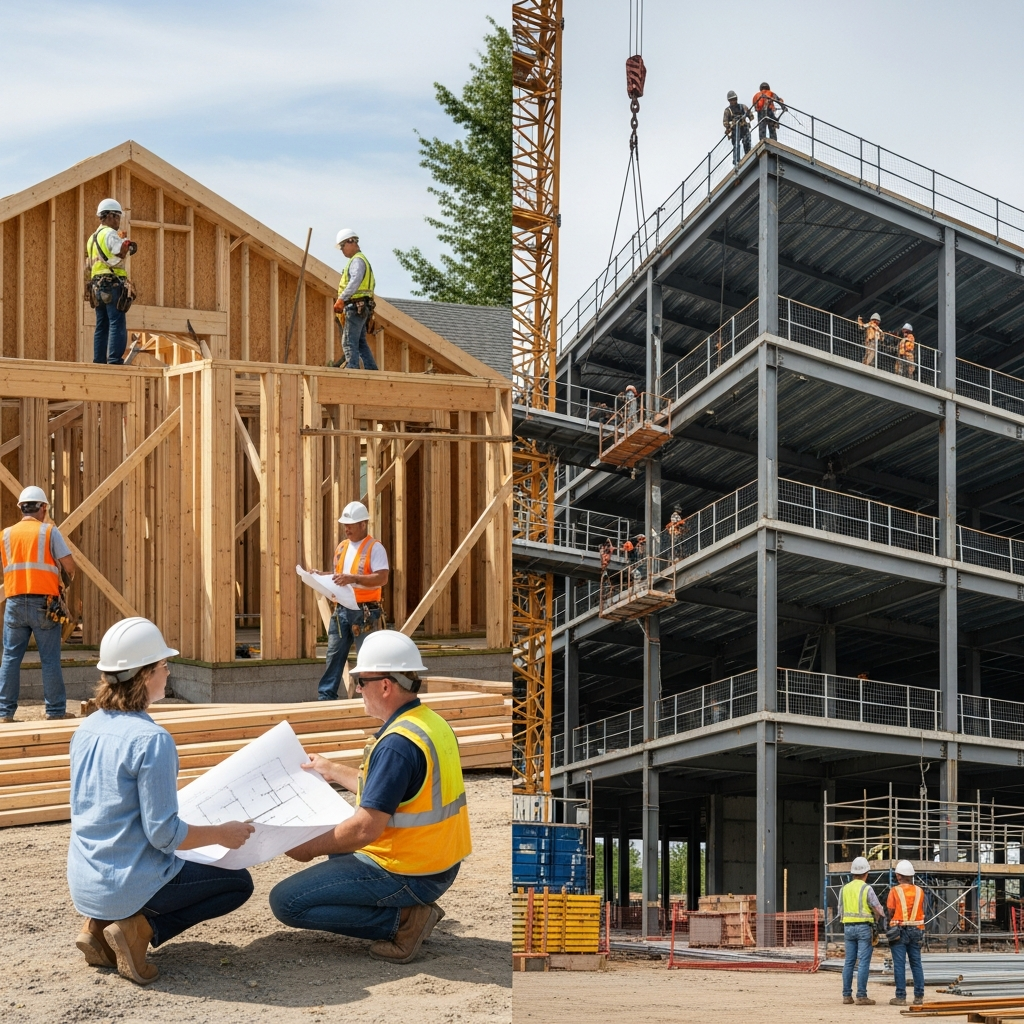
Residential general contractors build and remodel homes. That includes single-family houses, townhomes, additions, kitchen remodels, and whole-home renovations. Projects are smaller in scope but often involve more direct client interaction. Homeowners have opinions, change their minds, and need updates.
Commercial general contractors handle office buildings, retail spaces, warehouses, schools, and mixed-use developments. Projects run larger, timelines stretch longer, and budgets involve more zeros. You're coordinating more trades, managing bigger crews, and dealing with architects, engineers, and project owners who expect detailed documentation at every stage.
Some states issue separate licenses for residential and commercial work. Others use a single general contractor license that covers both, sometimes with dollar thresholds that vary by project type.
General Contractor vs Subcontractor vs Construction Manager
These three roles get mixed up constantly, but they work at different layers of the same job.
A general contractor signs the prime contract with the owner and carries the full project risk. They hire subcontractors, run the schedule, and hand over the finished building. When things go sideways, they're the ones who fix it.
Subcontractors handle specialized work like electrical, plumbing, HVAC, or framing. They contract with the general contractor, not the owner. Their scope is defined and narrow, and they don't coordinate other trades.
Construction managers oversee the project without performing the work themselves. They represent the owner, review budgets and schedules, and keep everyone moving forward without picking up tools.
When You Need A General Contractor
You need a general contractor when your project involves multiple trades working in sequence. Remodeling a kitchen means coordinating plumbers, electricians, cabinet installers, and countertop crews at the right times. A GC handles that scheduling.
Permit complexity is another reason. Projects requiring structural, electrical, or plumbing permits come with inspections and code compliance that most property owners don't manage themselves.
Budget size matters. Once a project exceeds $50,000, the risk of cost overruns and delays makes professional oversight worthwhile. You're paying someone to catch problems early.
If scope changes midway or you're uncertain about what needs to happen, a GC translates ideas into work without leaving gaps that cause delays.
The Current State Of The Construction Industry In 2026
Construction has 8.3 million workers as of 2025, supporting $2.2 trillion in annual spending recorded in 2024. The labor shortage hits harder each year. The industry needs 499,000 workers in 2026, up from 439,000 in 2025.
For general contractors, that gap means longer schedules, higher labor costs, and more time chasing down reliable subcontractors. Good trades book out weeks ahead. Projects stall when crews aren't available. Estimating gets harder when you can't predict who'll actually show up to swing the hammer.
Managing Construction Projects With Better Software
Juggling separate tools for project data creates friction. Information gets buried across logins. Questions take longer to answer because context lives in three different places. Field teams avoid systems that feel clunky on a phone.
The fix isn't adding another tool. It's replacing the stack with one system that connects the pieces.
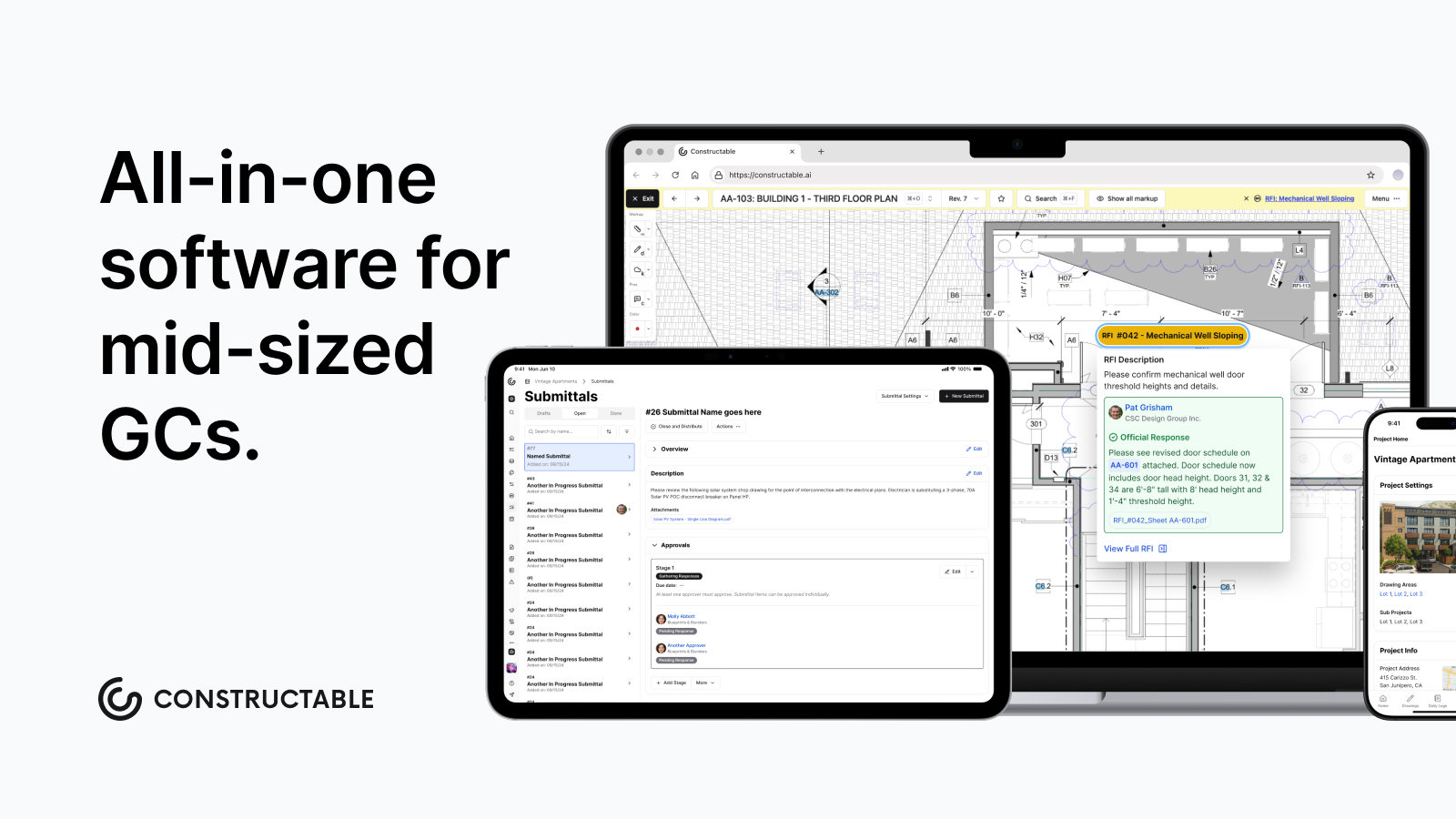
Constructable does exactly that for mid-size commercial general contractors. RFIs, submittals, drawings, daily logs, punch lists, change orders, and much more live together. AI-powered search pulls answers from across your project instantly. No duplicate entry. No hunting through folders. It just works.
General Contractor Licensing Requirements By State
Licensing requirements differ widely depending on where you work. Thirty-three states require a state-level general contractor license. Seventeen states as of 2025 have no statewide licensing requirement, though cities and counties within those states may still require local permits or registrations.
Where licensing exists, you'll need to document work experience, pass trade and business law exams, prove financial solvency, and secure a surety bond. Bond amounts vary by state, typically ranging from $10,000 to $50,000.
The experience requirement usually sits between two and four years working under a licensed contractor. Some states accept trade school or apprenticeship hours toward that total. Exams test construction knowledge and business practices. You'll answer questions on building codes, safety standards, contract law, and lien rights.
Licensing protects both sides. Clients get recourse if work goes wrong. Contractors get legitimacy and access to larger projects that require proof of credentials.
| State | Experience Required | Exam Required | Bond Amount | License Renewal |
|---|---|---|---|---|
| California | 4 years journey-level experience or equivalent combination of education and experience | Two-part exam covering law & business and trade knowledge | $25,000 contractor bond plus $15,000 disciplinary bond | Every 2 years with continuing education requirements |
| Texas | No statewide license required, local city permits vary by jurisdiction | Not applicable at state level | Not applicable at state level | Local requirements vary by municipality |
| Florida | 4 years verifiable experience in the construction industry within the last 10 years | Business and finance exam plus trade exam specific to license classification | Varies by classification, typically $10,000 to $25,000 | Every 2 years with 14 hours of continuing education |
| New York | 3 years experience under licensed contractor or 7.5 years total construction experience | Trade exam and business exam covering contract law and safety | $20,000 to $50,000 depending on project scope | Every 3 years with proof of continuing insurance |
| North Carolina | 2 years experience as licensed contractor or 5 years cumulative experience | Business law and project management exam specific to license level | $15,000 for unlimited license, lower for limited classifications | Annual renewal with no continuing education requirement |
| Arizona | 4 years full-time experience in construction management or supervision | Two-part exam covering business management and trade knowledge | $15,000 for commercial, $7,500 for residential | Every 2 years with no continuing education requirement |
Final Thoughts on General Contractor Work
You're managing subcontractors, permits, budgets, and schedules simultaneously. The last thing you need is software that slows you down. Constructable pulls everything together so your drawings, submittals, and daily logs work as one system instead of five logins. Projects move faster when information doesn't get lost between tools.
FAQ
How long does it take to get a general contractor license?
Most states require 3-5 years of documented work experience under a licensed contractor before you can sit for the licensing exam. After passing the test and securing your bond and insurance, the actual licensing process takes 4-8 weeks depending on your state's processing times.
What's the real difference between a general contractor and a subcontractor?
A general contractor signs the contract with the project owner, manages the entire job, and carries all the risk if something goes wrong. A subcontractor works for the general contractor, handles one specific trade (like plumbing or electrical), and only worries about their own scope of work.
Do I need a license in every state I want to work in?
Yes, if you're crossing state lines. Thirty-three states require a state-level general contractor license, and those licenses don't transfer. You'll need to apply separately in each state where you plan to take on projects, meeting their specific experience and exam requirements.
When should I hire a general contractor instead of managing trades myself?
Hire a GC when your project involves multiple trades that need to be sequenced properly, requires permits and inspections, or exceeds $50,000 in total cost. Once you're coordinating electricians, plumbers, and framers across different phases, professional oversight prevents costly delays and mistakes.